


When it comes to spring steel wire, one of the most fundamental yet often overlooked aspects is its cross - sectional shape. As a supplier of spring steel wire, I've encountered numerous inquiries regarding this topic. In this blog, I'll delve into the various cross - sectional shapes of spring steel wire, their characteristics, applications, and how they influence the performance of springs.
Common Cross - Sectional Shapes
Circular Cross - Section
The circular cross - section is by far the most common shape for spring steel wire. It has several advantages that make it a popular choice in a wide range of applications.
One of the primary benefits of a circular cross - section is its uniformity. The stress distribution around the circumference of the wire is relatively even when the spring is under load. This even stress distribution helps to prevent localized stress concentrations, which can lead to premature failure of the spring. For example, in automotive suspension springs, a circular wire cross - section ensures that the spring can withstand repeated compression and extension cycles without developing weak points.
Circular cross - section wires are also easy to manufacture. The drawing process, which is commonly used to produce spring steel wire, is well - suited for creating circular wires. This ease of manufacturing translates into lower production costs, making circular wire springs more affordable for mass - market applications.
Moreover, circular wires offer good flexibility. They can be easily coiled into various spring shapes, such as helical springs, torsion springs, and compression springs. The smooth surface of circular wires also reduces friction when the spring moves, which is beneficial in applications where low - friction operation is required, like in precision instruments.
If you're interested in circular cross - section spring steel wire, you can check out our 302 Stainless Steel Spring Wire. It is made of high - quality 302 stainless steel, which provides excellent corrosion resistance and mechanical properties.
Rectangular Cross - Section
Rectangular cross - section spring steel wire is another important type. It offers unique advantages compared to circular wires.
One of the main benefits of rectangular cross - section wires is their high energy - storage capacity. The flat shape allows for a larger surface area, which means that more material is available to store elastic energy when the spring is deformed. This makes rectangular cross - section springs ideal for applications where high - energy storage is required, such as in heavy - duty industrial machinery and large - scale construction equipment.
In addition, rectangular cross - section springs can provide a more stable spring rate. The flat sides of the wire help to maintain the shape of the spring under load, reducing the likelihood of lateral deflection. This stability is crucial in applications where precise spring performance is needed, like in die springs used in metal stamping operations.
However, manufacturing rectangular cross - section wires is more complex than circular wires. Specialized rolling and forming processes are required to achieve the desired rectangular shape. This complexity can lead to higher production costs, but the performance benefits often justify the expense in high - end applications.
For those in need of rectangular cross - section spring steel wire, our 60Si2MnA Spring Steel Wire is a great option. It is made of 60Si2MnA alloy steel, which has high strength and good fatigue resistance, making it suitable for demanding applications.
Square Cross - Section
Square cross - section spring steel wire combines some of the features of circular and rectangular cross - sections.
Like rectangular wires, square cross - section wires have a relatively large surface area, which allows for better energy storage compared to circular wires. They also offer more stability than circular wires due to their flat sides. This stability is useful in applications where the spring needs to maintain its shape and position, such as in some types of valve springs.
On the other hand, square cross - section wires are easier to manufacture than rectangular wires in some cases. The square shape can be achieved through a combination of drawing and rolling processes, and the manufacturing equipment for square wires is more readily available compared to that for rectangular wires.
Our 1074 Spring Steel Wire is available in square cross - section. It is made of 1074 carbon steel, which provides good strength and toughness, making it suitable for a variety of spring applications.
Factors Influencing the Choice of Cross - Sectional Shape
Application Requirements
The specific requirements of the application play a crucial role in determining the appropriate cross - sectional shape. For example, in applications where space is limited, circular cross - section springs may be preferred because they can be more easily coiled into compact shapes. In contrast, in applications where high energy storage and stability are required, rectangular or square cross - section springs may be a better choice.
Load Conditions
The type and magnitude of the load that the spring will experience also affect the choice of cross - sectional shape. If the spring is subjected to a pure axial load, a circular cross - section may be sufficient. However, if the spring is exposed to bending or torsional loads, a rectangular or square cross - section may provide better performance due to their higher resistance to these types of loads.
Cost Considerations
Cost is always an important factor in any engineering decision. Circular cross - section springs are generally more cost - effective due to their ease of manufacturing. However, if the performance requirements of the application cannot be met by circular springs, the additional cost of using rectangular or square cross - section springs may be justified.
Impact of Cross - Sectional Shape on Spring Performance
Fatigue Life
The cross - sectional shape can significantly affect the fatigue life of a spring. As mentioned earlier, circular cross - section wires have a more even stress distribution, which generally leads to a longer fatigue life compared to non - circular shapes. However, in applications where the spring is designed to operate under specific load conditions, rectangular or square cross - section springs can be engineered to have a comparable or even longer fatigue life by optimizing the material and manufacturing process.
Spring Rate
The spring rate, which is the ratio of the force applied to the spring to the resulting deflection, is also influenced by the cross - sectional shape. Rectangular and square cross - section springs typically have a higher spring rate compared to circular cross - section springs of the same material and size. This is because the flat sides of the non - circular wires provide more resistance to deformation.
Deflection Characteristics
The cross - sectional shape can affect the deflection characteristics of a spring. Circular cross - section springs tend to have a more linear deflection behavior, which means that the deflection is proportional to the applied load over a wide range. Rectangular and square cross - section springs may have a more non - linear deflection behavior, which can be advantageous in some applications where a specific deflection pattern is required.
Conclusion
In conclusion, the cross - sectional shape of spring steel wire is a critical factor that affects the performance, cost, and application of springs. As a spring steel wire supplier, we offer a wide range of cross - sectional shapes to meet the diverse needs of our customers. Whether you need a circular cross - section for its affordability and flexibility, a rectangular cross - section for its high energy storage, or a square cross - section for its balance of performance and manufacturability, we have the right solution for you.

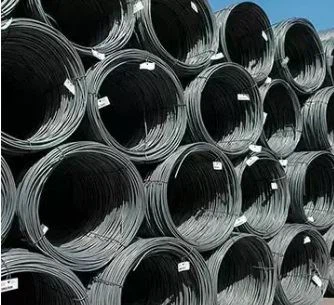
If you're interested in learning more about our spring steel wire products or have specific requirements for your application, we encourage you to contact us for a detailed discussion. Our team of experts is ready to assist you in selecting the most suitable spring steel wire and providing you with the best solutions for your projects.
References
- "Mechanical Springs Handbook" by Design News.
- "Spring Design and Manufacturing" by ASM International.


