


Hey there! As a supplier of alloy steel plates, I often get asked about the tensile strength of these bad boys. So, I thought I'd take a few minutes to break it down for you.
First off, let's talk about what tensile strength actually is. In simple terms, it's the maximum amount of stress a material can handle before it breaks when it's being pulled apart. Think of it like trying to stretch a rubber band until it snaps. The point at which it snaps is its tensile strength.
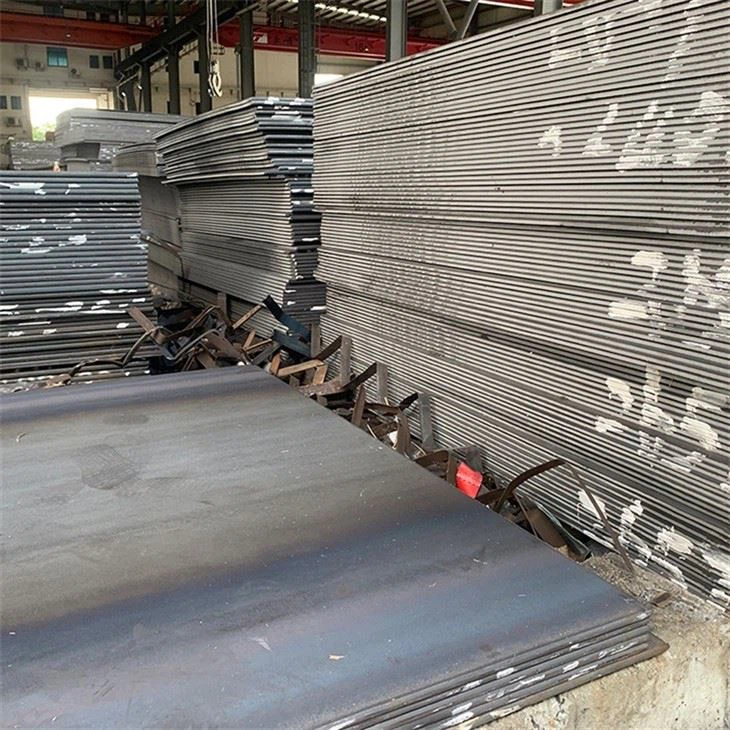

Now, alloy steel plates are pretty special. They're made by adding various alloying elements to carbon steel, like chromium, nickel, and molybdenum. These elements give the steel some extra oomph, making it stronger, more durable, and better able to withstand high temperatures and corrosion.
But how does this all translate to tensile strength? Well, the tensile strength of an alloy steel plate depends on a few things, like the specific alloying elements used, the heat treatment process, and the thickness of the plate.
Let's start with the alloying elements. Different elements have different effects on the tensile strength of the steel. For example, chromium is great for increasing hardness and corrosion resistance, which can also boost tensile strength. Nickel, on the other hand, improves toughness and ductility, which can help the steel withstand more stress before breaking. And molybdenum is known for enhancing the strength and hardness of the steel, especially at high temperatures.
The heat treatment process is also crucial. By heating and cooling the steel in a controlled way, we can change its microstructure and properties. For instance, quenching and tempering is a common heat treatment method that can significantly increase the tensile strength of the steel. Quenching involves rapidly cooling the steel from a high temperature, which creates a hard and brittle structure. Then, tempering is done to reduce the brittleness and improve the toughness of the steel.
The thickness of the plate also plays a role. Generally, thicker plates tend to have lower tensile strength compared to thinner ones. This is because thicker plates have more internal stresses and are more likely to have defects or inclusions, which can weaken the material.
Now, let's take a look at some specific types of alloy steel plates and their tensile strengths.
One popular type is the 16Mo3 Alloy Steel Plate. This plate is often used in applications where high temperature and pressure are involved, like in boilers and pressure vessels. The tensile strength of 16Mo3 alloy steel plate typically ranges from 450 to 600 MPa (megapascals).
Another common type is the 40Cr Alloy Steel Plate. This plate is known for its high strength, good toughness, and excellent wear resistance. It's widely used in machinery manufacturing, automotive parts, and other industries. The tensile strength of 40Cr alloy steel plate usually falls between 980 and 1180 MPa.
And then there's the 42CrMo Alloy Steel Plate. This plate is similar to 40Cr but has a higher molybdenum content, which gives it even better strength and toughness. It's often used in heavy-duty applications, such as in the construction of bridges, cranes, and mining equipment. The tensile strength of 42CrMo alloy steel plate can range from 1080 to 1320 MPa.
So, as you can see, the tensile strength of alloy steel plates can vary quite a bit depending on the type and specifications. When choosing an alloy steel plate for your project, it's important to consider the specific requirements and conditions, such as the load it will bear, the temperature and pressure it will be exposed to, and the environment it will be used in.
At our company, we offer a wide range of alloy steel plates with different tensile strengths to meet your needs. Whether you're looking for a plate with high strength for a heavy-duty application or a plate with good corrosion resistance for a marine environment, we've got you covered.
If you're interested in learning more about our alloy steel plates or have any questions about tensile strength or other properties, don't hesitate to get in touch. We're here to help you find the right solution for your project. Just reach out to us, and we'll be happy to discuss your requirements and provide you with a quote.
In conclusion, understanding the tensile strength of alloy steel plates is essential for choosing the right material for your project. By considering the alloying elements, heat treatment, and thickness, you can ensure that the plate you select has the strength and performance you need. And if you need any assistance or have any questions, we're just a message away.
References:
- "Metallurgy for Dummies" by Jeff Hovanec
- "Materials Science and Engineering: An Introduction" by William D. Callister Jr. and David G. Rethwisch


